
Tempered vs Laminated Glass: 7 Smart Safe Choices
Tempered vs laminated glass is an important topic when you are replacing damaged glass in a Sydney home, office, shopfront, or commercial property. Both glass types can improve safety, but they work in different ways and suit different situations.
When a window, door, shopfront, or glass panel breaks, many people only think about replacing it quickly. However, choosing the right glass type matters just as much as the replacement itself. The wrong choice can affect safety, privacy, noise control, security, and long-term comfort.
At SYD City Glass, the team provides glass repair, glass replacement, and glazing services across Sydney. The business helps with window glass, door glass, shopfront glass, shower screens, table tops, commercial glass doors, pool fencing, and emergency glass replacement.
If you are unsure about tempered vs laminated glass, this guide explains the key differences in simple terms, so you can make a smarter choice before booking glass replacement.
Why Tempered vs Laminated Glass Matters
Glass is not the same in every part of a property. A small bathroom window may need a different glass type from a large sliding door, shopfront, balcony panel, or office partition. Because of this, tempered vs laminated glass decisions should depend on where the glass sits, how people use the area, and what safety risks are involved.
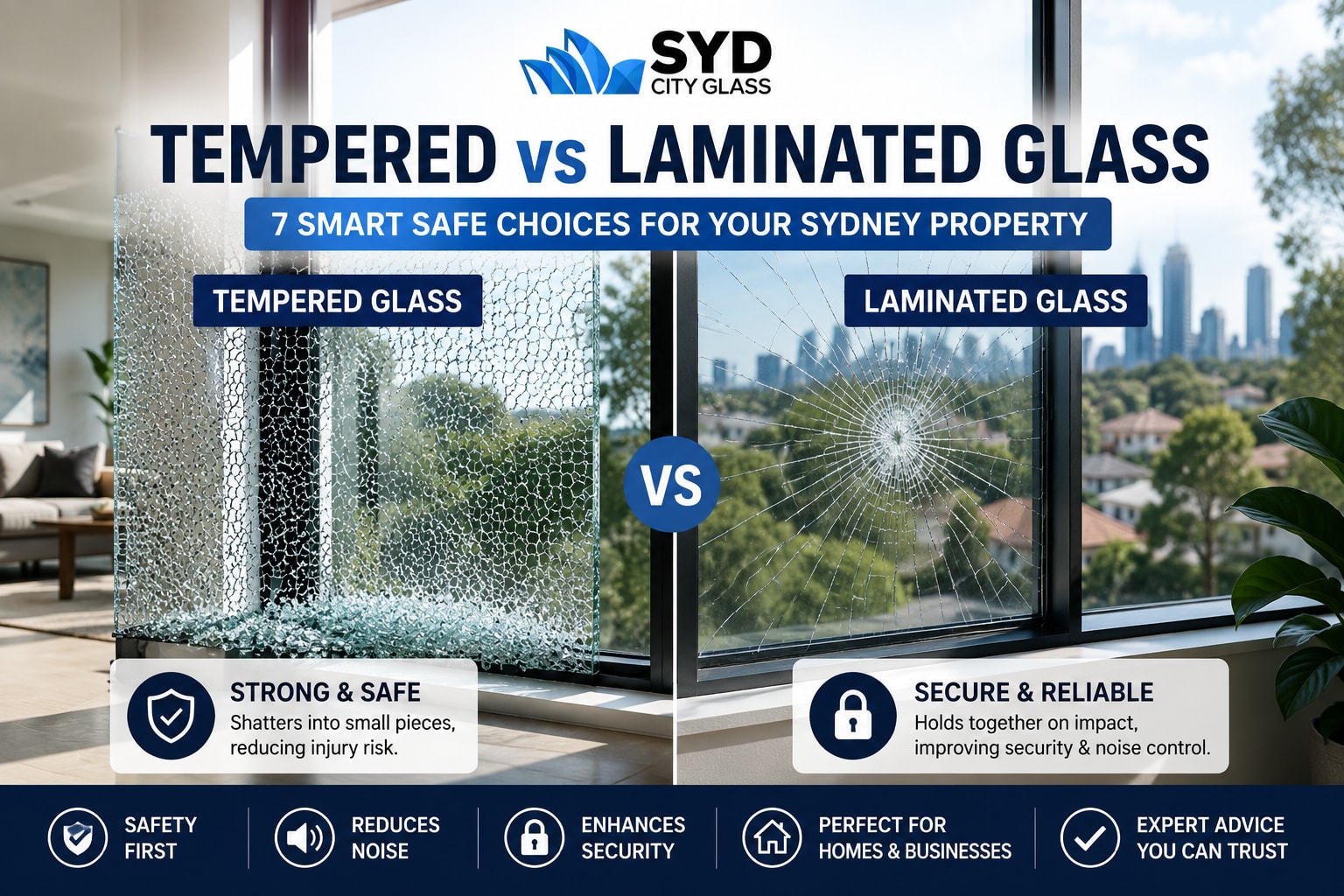
Tempered glass, also known as toughened glass, goes through a heating and cooling process that makes it stronger than ordinary glass. When it breaks, it usually shatters into small, blunt-like pieces instead of large sharp shards.
Laminated glass has two or more layers of glass with an interlayer between them. When it breaks, the interlayer helps hold the broken glass together. As a result, laminated glass can offer better security, noise reduction, and protection from falling glass pieces.
Both options have benefits. However, one may suit your property better than the other.
1. Choose Tempered Glass for Strength
Tempered glass is a strong and practical option for many areas where impact safety matters. It is commonly used in doors, shower screens, glass pool fencing, and other areas where people may come into contact with the glass.
Because tempered glass is stronger than standard glass, it handles everyday knocks and pressure better. This makes it useful for busy homes and commercial properties.
Tempered glass may suit:
- Shower screens
- Glass doors
- Pool fencing
- Glass table tops
- Internal glass panels
- Areas with regular use
- Homes with children or pets
However, once tempered glass breaks, it usually shatters completely. Therefore, it may not be the best option when you need the glass to stay in place after impact.
2. Choose Laminated Glass for Security
Laminated glass is often a smart option where security matters. Because the interlayer helps hold broken glass together, it can make it harder for someone to enter through the damaged panel quickly.
This makes laminated glass useful for doors, shopfronts, office entries, street-facing windows, and commercial glass areas.
Laminated glass may suit:
- Shopfront windows
- Entry doors
- Street-facing glass
- Commercial glass doors
- Office partitions
- Balcony glass areas
- Homes needing extra security
In addition, laminated glass can reduce the risk of loose shards falling across the floor after breakage. That can be helpful for homes, businesses, and public-facing properties.
3. Think About Noise Reduction
Noise is a common issue in Sydney, especially near main roads, busy suburbs, schools, construction areas, train lines, or commercial zones. If outside noise is a concern, laminated glass may be the better choice.
The interlayer inside laminated glass can help reduce sound transfer. As a result, it can make indoor spaces feel quieter and more comfortable.
This can be useful for:
- Bedrooms facing busy roads
- Apartments in high-traffic areas
- Offices needing quieter rooms
- Street-facing shopfronts
- Homes near schools or transport routes
Tempered glass still provides safety strength, but it does not usually offer the same sound control benefit as laminated glass. Therefore, when comparing tempered vs laminated glass for noise, laminated glass often has the advantage.
4. Consider Where the Glass Is Located
Location plays a big role in choosing the right glass. For example, a glass table top has different requirements from a balcony door. A shopfront has different risks compared to a bathroom window.
For window replacement, you can view SYD City Glass’s window glass replacement service. For damaged doors, you can also visit the glass door replacement service page.
A professional glazier will usually consider:
- Glass size
- Height from the floor
- Door or window use
- Impact risk
- Weather exposure
- Security needs
- Privacy requirements
- Residential or commercial use
Because of this, it is better to get advice before choosing the glass yourself. What works well in one area may not suit another.
5. Match the Glass to Your Safety Needs
Safety should always come first. If people regularly walk near the glass, touch the glass, or use the door daily, you need a suitable safety glass option.
Tempered glass can reduce injury risk because it breaks into smaller pieces. Laminated glass can reduce risk because it helps keep broken glass together. Both can support safer outcomes, but they perform differently after impact.
For example, tempered glass may suit a shower screen because it breaks into smaller pieces. On the other hand, laminated glass may suit a shopfront because it can stay in place better after damage.
If the damage is urgent or unsafe, SYD City Glass also provides 24/7 emergency glass replacement services across Sydney.
6. Think About Appearance and Privacy
Both glass types can look clean and modern, but you can also choose different finishes depending on your property. For example, some areas may need clear glass for light and visibility, while others may need frosted or privacy glass.
Tempered glass and laminated glass can both work with different design needs. However, your choice may depend on whether the glass sits in a bathroom, office, entry door, shopfront, or outdoor area.
For example:
- Clear glass suits open living spaces
- Frosted glass suits bathrooms and offices
- Tinted glass can reduce glare
- Laminated glass can support privacy and noise control
- Toughened glass can suit areas needing strength
If you are planning a full upgrade, speak with SYD City Glass about your property, style, and daily use. The team can help you choose a practical glass option that fits the space.
7. Get Professional Advice Before Replacing Glass
When comparing tempered vs laminated glass, the best choice depends on the job. There is no single answer that suits every property. A professional glazier can inspect the damage, measure the area, check safety needs, and recommend a suitable replacement.
This is especially important for:
- Large glass panels
- Commercial entries
- Shopfronts
- Sliding glass doors
- Balcony areas
- Shower screens
- Pool fencing
- Low-level glass near walkways
SYD City Glass provides a wide range of glass replacement services, including shopfront glass replacement, commercial glass door replacement, shower screen replacement, and glass pool fencing.
As a result, you can get the right advice for both residential and commercial glazing needs.
Tempered vs Laminated Glass for Sydney Homes
Sydney homes often need glass that handles daily use, weather changes, family safety, and street noise. Therefore, the choice depends on your property layout.
Tempered glass may be suitable for areas where strength and impact safety are the main concerns. Laminated glass may suit areas where security, noise reduction, and glass retention matter more.
For example, a sliding patio door may need strong safety glass because people use it daily. A front-facing window may benefit from laminated glass if security and road noise are concerns. A shower screen may need toughened safety glass because of the way people use the space.
Because every home is different, a proper inspection helps you avoid mistakes.
Tempered vs Laminated Glass for Businesses
Businesses often have different needs from homes. A damaged shopfront, office entry, or commercial glass door can affect security, customer safety, and business presentation.
For business properties, laminated glass can be useful where glass needs to stay together after impact. Tempered glass can work well in internal areas where strength and safety matter.
Common commercial uses include:
- Shopfronts
- Office doors
- Meeting room partitions
- Commercial entry doors
- Display windows
- Internal glass panels
If your business needs urgent help, contact SYD City Glass for professional glazing support across Sydney.
Useful Glass Safety Resource
For general information about Australian building and glazing requirements, you can visit the Australian Building Codes Board. This resource helps explain why correct glass selection and safe installation matter for homes and commercial properties.
A qualified glazier should always help choose glass for areas where safety, impact, height, or daily use matters.
Areas SYD City Glass Services
SYD City Glass services Sydney-wide, including Canley Heights, Sydney CBD, Guildford, North Sydney, Manly, Hurstville, Bondi Junction, Parramatta, Campbelltown, Norwest, North Ryde, Marrickville, Miranda, Rouse Hill, and surrounding Sydney suburbs.
You can view more location details on the contact and locations page.
Book Glass Replacement in Sydney
If you are comparing tempered vs laminated glass for your home, shop, office, or commercial property, SYD City Glass can help you choose a suitable option.
Call: 1300 290 375
Website: sydcityglass.com.au
Google Business Profile: View SYD City Glass on Google
FAQs About Tempered vs Laminated Glass
What is the main difference between tempered and laminated glass?
Tempered glass is heat-treated for strength and usually breaks into smaller pieces. Laminated glass has an interlayer that helps hold broken glass together after impact.
Is laminated glass better than tempered glass?
Not always. Laminated glass is often better for security and noise reduction, while tempered glass is often useful for strength and impact safety. The best option depends on the location and use.
Which glass is better for doors?
It depends on the door type. Sliding doors, entry doors, shopfront doors, and internal doors may need different glass. A glazier can inspect the door and recommend the right option.
Which glass is better for noise reduction?
Laminated glass usually performs better for noise reduction because of its interlayer. This can help homes and offices near traffic, schools, or busy streets.
Can SYD City Glass help me choose the right glass?
Yes. SYD City Glass provides glass repair, replacement, and glazing services across Sydney. The team can inspect your property and recommend a suitable glass replacement option.
Conclusion
Tempered vs laminated glass is not about choosing one option as better for every job. Instead, it is about choosing the right glass for the right location.
Tempered glass offers strength and impact safety. Laminated glass offers security, sound control, and better glass retention after breakage. Both can be valuable when used correctly.
If you need help choosing the right glass for your property, contact SYD City Glass on 1300 290 375 or visit sydcityglass.com.au.
continue reading


